
Introducing the ‘ExoHub’: New opportunities for restoring oysters
In response to a growing market demand for oyster restoration, Exo Engineering have begun to explore opportunities for restoring this habitat-engineering species.
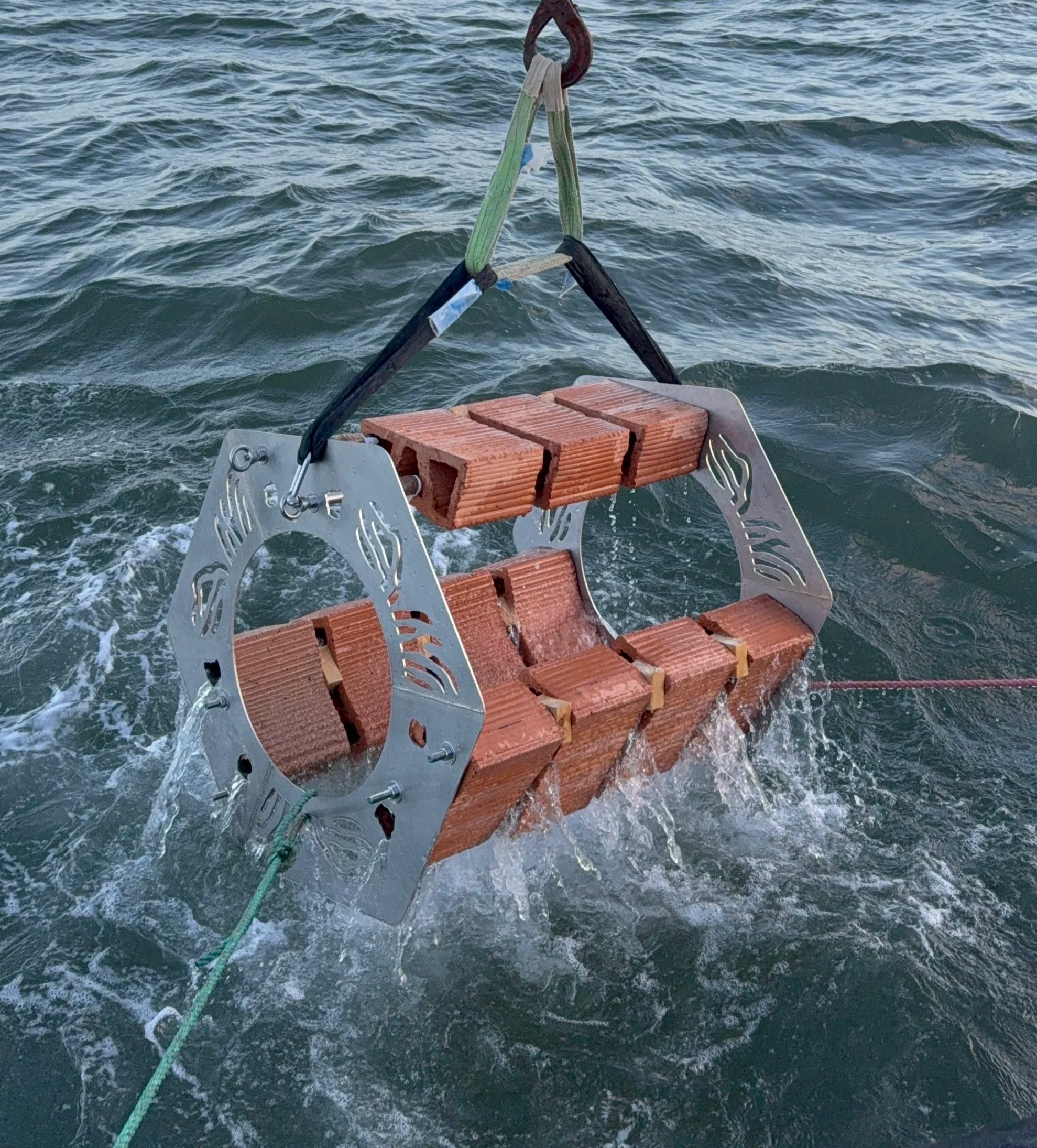
ExoHub during trial deployment, North Norfolk coast
Native Oysters (Ostrea edulis) once dominated the nearshore areas of our coastline, and were especially prevalent around the Wash and North Norfolk coast. Their populations have been decimated over the past 200 years, having declined by an estimated 95% due to pressures like overexploitation, pollution and disease. Now, there is a growing movement to restore this once-abundant species.
In addition to their role as a food source since the time of the Romans, they also provide the critical ecosystem service of water filtration, with an adult native oyster capable of filtering up to 200 litres of water per day.
In collaboration with Oyster Heaven, Exo Engineering have developed the ExoHub. This stainless steel structure took inspiration from our ExoLodge units: hexagonal artificial reefs which provide refuge for mobile marine fauna.
The ExoHub has been designed to be deployed on the seabed or alternatively suspended beneath coastal or marine infrastructure. Two units were developed: a smaller unit dubbed the ExoHub Mini, and a larger unit: the ExoHub Maxi. The modular design enables a scalable approach to oyster restoration, depending on the reqirements of clients.
A trial deployment took place earlier this month off the North Norfolk coast, during which a mock deployment was successfully demonstrated that the ExoHub could be deployed using conventional deployment approaches.
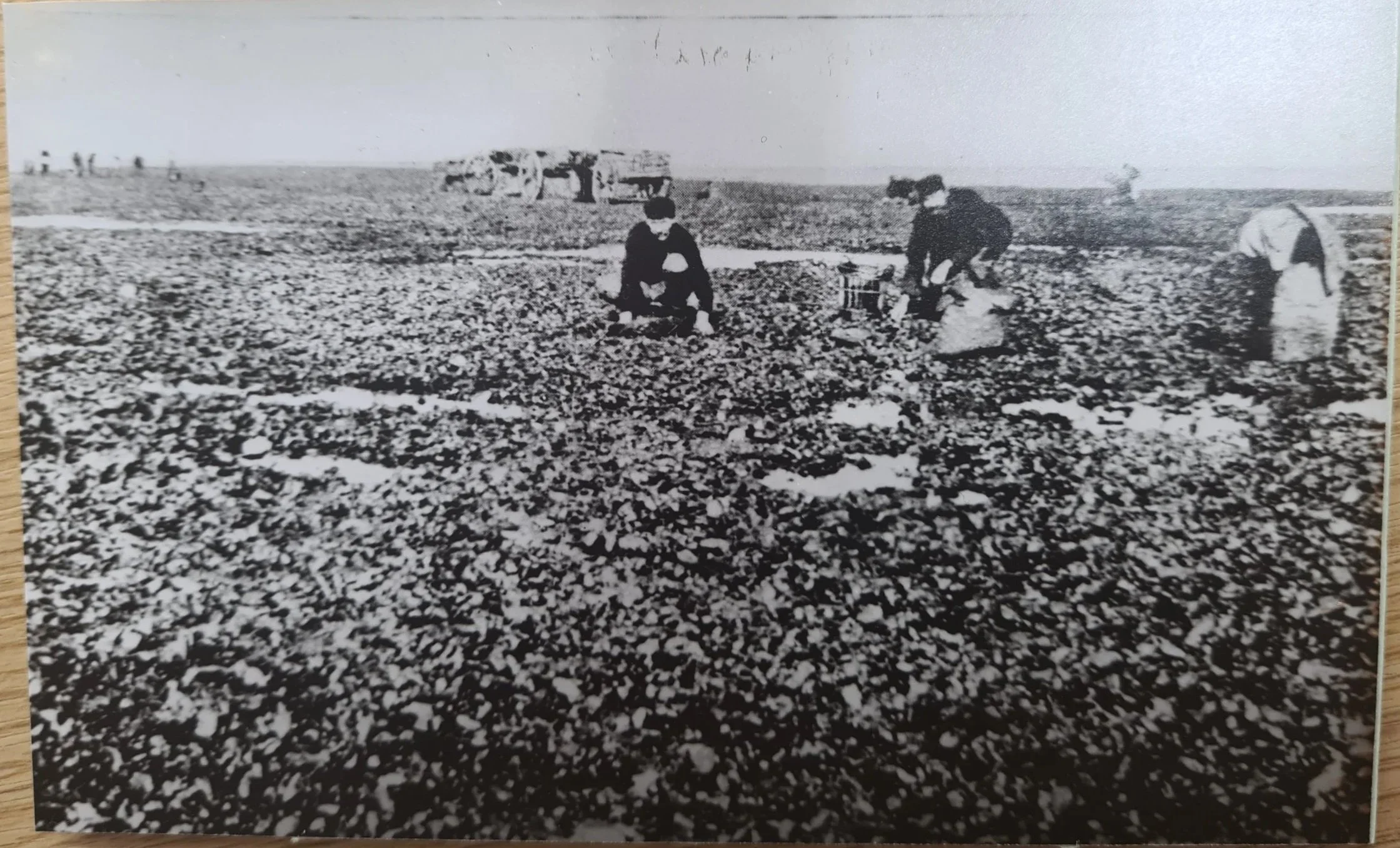
Huge numbers of native oysters being harvested at Hunstanton, North Norfolk circa 1900. (Credit: True’s Yard Museum Archives, Kings Lynn)
Have you got a project involving oyster restoration? Get in touch with us to find out how the ExoHub can help you with your oyster restoration objectives