
Trio of Living Windfarms Project workshops capture industry perspectives
Knowledge sharing and engagement with stakeholders within the offshore wind industry is essential for ensuring success for Nature-Inclusive design within offshore wind. In November, Exo Engineering hosted a series of Living Windfarms Project workshops, each aimed at engaging with various stakeholders and sharing the findings of the Living Windfarms Project.
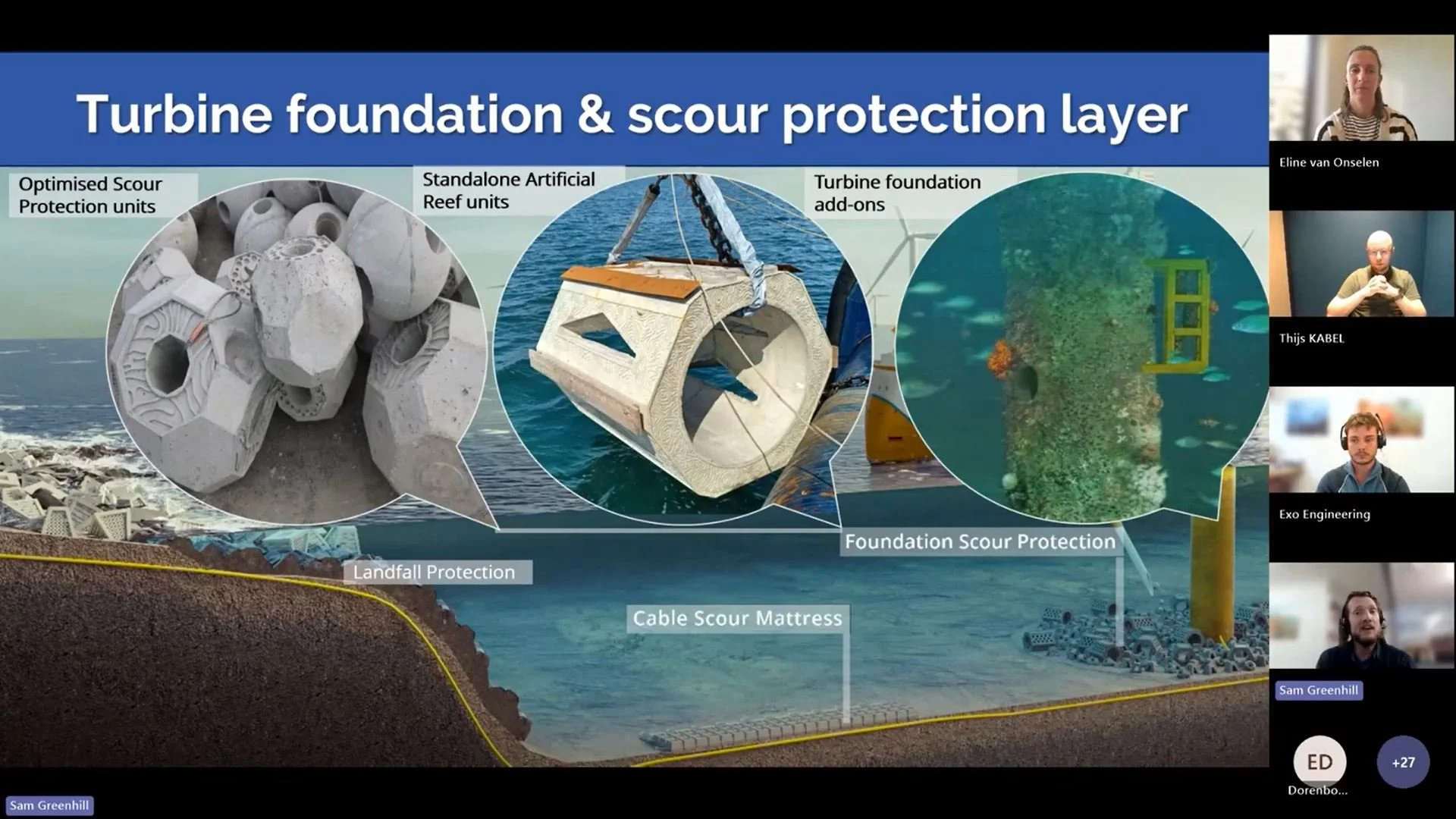
The Living Windfarms Project began in June 2022 and is part-funded by the Offshore Wind Growth Partnership. During the project, Exo Engineering have been able to develop 7 Nature-Inclusive solutions for offshore wind, including units which combine functional scour protection and habitat provision for marine organisms, as well as Nature-Inclusive artificial reefs and units designed to aid oyster restoration.
Ecology, Contractor and Policy focussed sessions were held on the 10th, 11th and 13th of November respectively. During the workshops, interactive SWOT analyses were conducted to gain information about perspectives of 5 different Nature-Inclusive interventions which can be used within Offshore Wind. These interventions included: Nature-Inclusive turbine scour protection, Nature-Inclusive scour protection mattresses, turbine addon structure, standalone artificial reefs, and oyster restoration.
As part of the workshops, we were joined by project partners Total Energies in the Netherlands and the Rich North Sea, whom we have worked alongside to deploy our Nature-Inclusive units in the Celtic Sea and Dutch North Sea.
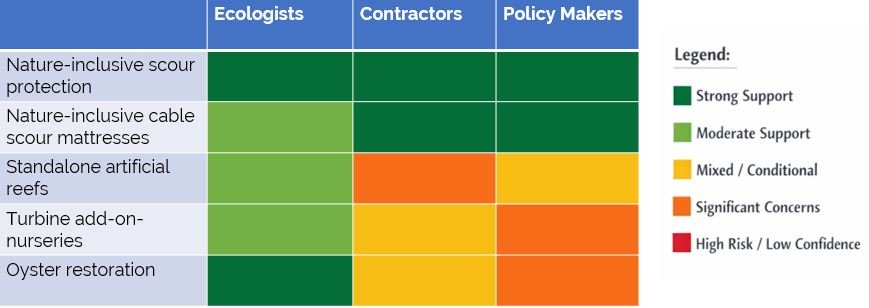
Differences in perception of each Nature-Inclusive intervention between different groups
Ecology Session
The first session, taking place on November 10th, invited ecologists and those with an interest in ecology to join us for an interactive workshop. Guest speaker Sam Greenhill from Exo Environmental shared some of the design features we can incorporate when designing Nature Inclusive infrastructure for offshore wind, and the benefits these bring for marine life.
The interactive SWOT analysis highlighted the opportunities for biodiversity enhancement and spill over benefits for fisheries as perceived strengths of Nature-Inclusive Design by Ecologists, whilst risk of non-native invasive species and challenges with monitoring duration were put forwards as perceived weaknesses.
Contractor Sessions
During the second session, which took place on the 11th of November, we were fortunate enough to be joined by guest speaker Renske Free from Boskalis. Renske discussed some of the key considerations for contractors, such as the importance of early involvement in Nature-Inclusive projects to ensure efficiency and the benefits that collaboration has when encouraging successful projects.
Some of the perceived strengths of Nature-Inclusive designs by contractors during the interactive SWOT analysis were the compatibility with existing scour protection methodologies, and the reduction in amount of time offshore due to combination with existing operations. Conversely, offshore installation costs and programme risk and delays were cited as potential weaknesses of Nature-Inclusive interventions within offshore wind.
Policy Sessions
Our final targeted workshop, focussed on policymakers and those interested in offshore wind policy, took place on the 13th of November. During the workshop, we were joined by guest speaker Pim Somers from the North Sea Foundation, who shared insights into the greatly debated topic of decommissioning for renewable energy infrastructure. Unlike conventional energy infrastructure like gas and oil platforms, which legally must be removed to leave a “clean seabed”, this is currently not the case for renewable energy infrastructure.
During the SWOT analysis, alignment with national and EU policy goals, and the support of net gain/nature positive commitments were put forward as strengths of Nature-Inclusive interventions by attendees, whereas the unclear end of life responsibilities and difficulty enforcing non-mandatory measures were both suggested as potential weaknesses for Nature-inclusive interventions within offshore wind.
Would you like to learn more about the Living Windfarms Project? Head over to the Living Windfarms Project website