
Bespoke Artificial Reef Surveys in the North Sea: one year on
In September 2025, the first of our annual surveys were undertaken of our bespoke artificial reefs, aimed at boosting biodiversity and increasing cod numbers in the North Sea.
In summer 2024, baseline biodiversity surveys were undertaken, and our “ExoLodge” bespoke artificial reefs were deployed at an offshore energy site as part of the Living Windfarms Project, in collaboration with TotalEnergies in the Netherlands and The Rich North Sea. One year on, we returned to the site to undertake repeat surveys and monitor the positive effects that the artificial reefs may be having at this early stage.
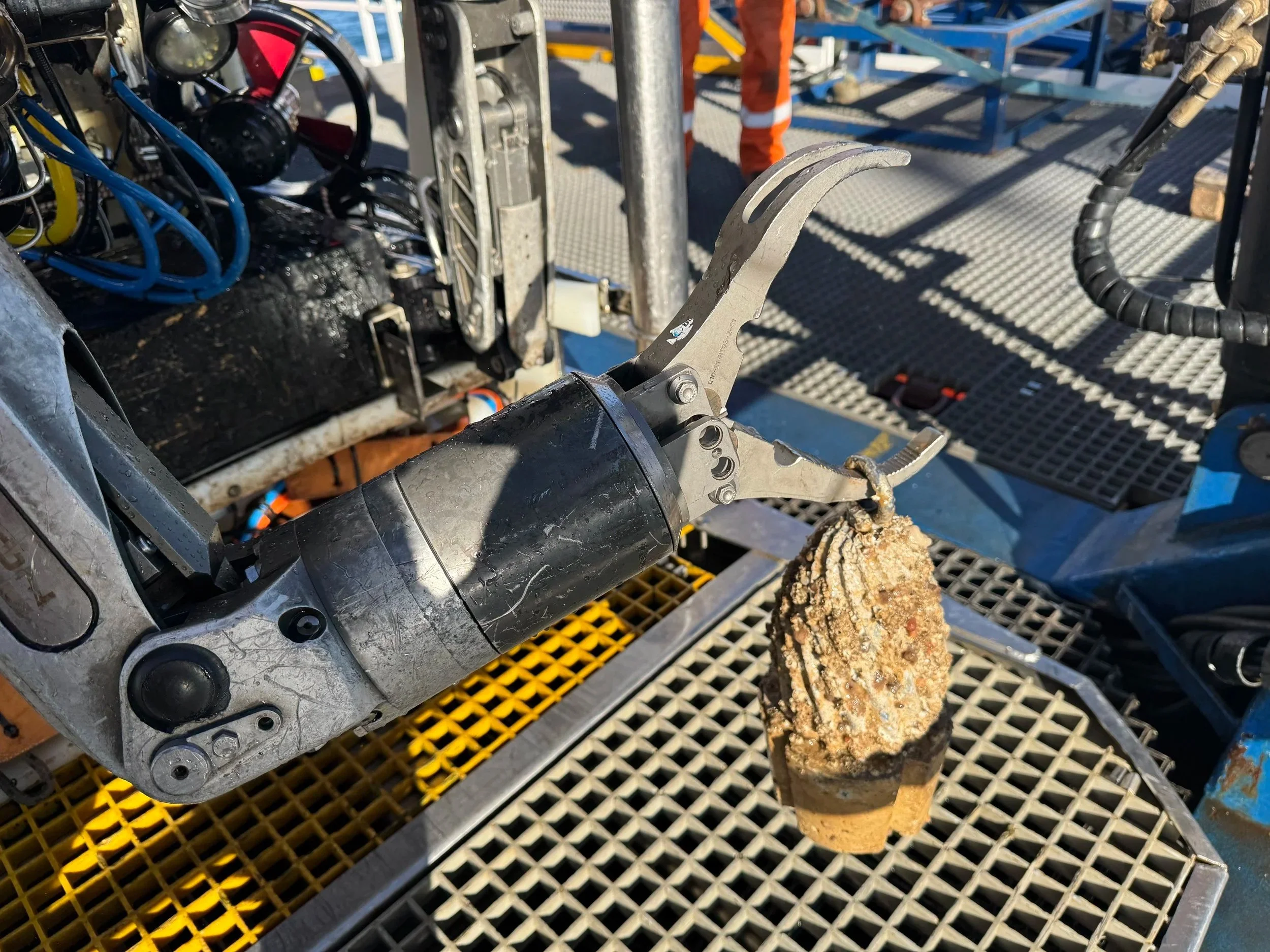
Removable reef plug, retrieved using ROV
Making use of pre-planned maintenance inspections, a work-class ROV recorded video footage of the five ExoLodges at the site, along with reference areas of the offshore platform’s jacket, and a concrete block deployed as a control, which lacked the same design features present on the ExoLodges. In addition to the video surveys, using the ROV’s specialised multipurpose arm, one of our specially designed reef plug add-ons was removed from the top of an ExoLodge, preserved and sent for taxonomic analysis of the colonising species present.
The objective of these surveys was to assess the colonising species associated with the ExoLodges at this early stage, and see how this compares to the baseline monitoring results recorded in the previous year. Specialist marine ecologists analysed both the footage and species colonising the reef plug to compile a comprehensive list of these early colonisers.
From the video surveys, a total of 21 species were recorded, with the average number of species per ExoLodge greater than those recorded on the control block, and similar to the number of species recorded on the jacket leg. This is a promising result, as the ExoLodges have only been in place for 1 year, whereas the jacket has had more than 30 years for a community to develop.
In addition, the videos provided keys insights into how different species are making use of the different niche habitats that we have designed. Crab and lobster species were recorded using the holes and crevices of the ExoLodges, and these were present in much greater numbers than on our control block, which lacked these design features. Large numbers of fish, such pouting, a smaller relative of cod, were also seen taking advantage of the large central tunnel for shelter.
From the analysis of the recovered reef plug, a further 43 species were recorded. This included the tube-building ecosystem engineer, Ross worm, Sabellaria spinulosa, one of the target species for the project. This was especially exciting to see, as Ross worm had not been recorded at the site during the baseline survey undertaken the year prior. In addition, the juveniles of many species were recorded, including worms, sea urchins, sea anemones, bivalves, and crabs. So even after 1 year, it appears that the habitat-forming features we have designed not only attract species, but potentially also help to improve the productivity of the local ecosystem as well.
Monitoring of our bespoke artificial reefs will continue in the coming years, and we are excited to see how the community of species which call them home will continue to evolve.
Get in touch to find out how we can help you to monitor the impact of your project