
Supporting declining cod populations with Nature Inclusive design
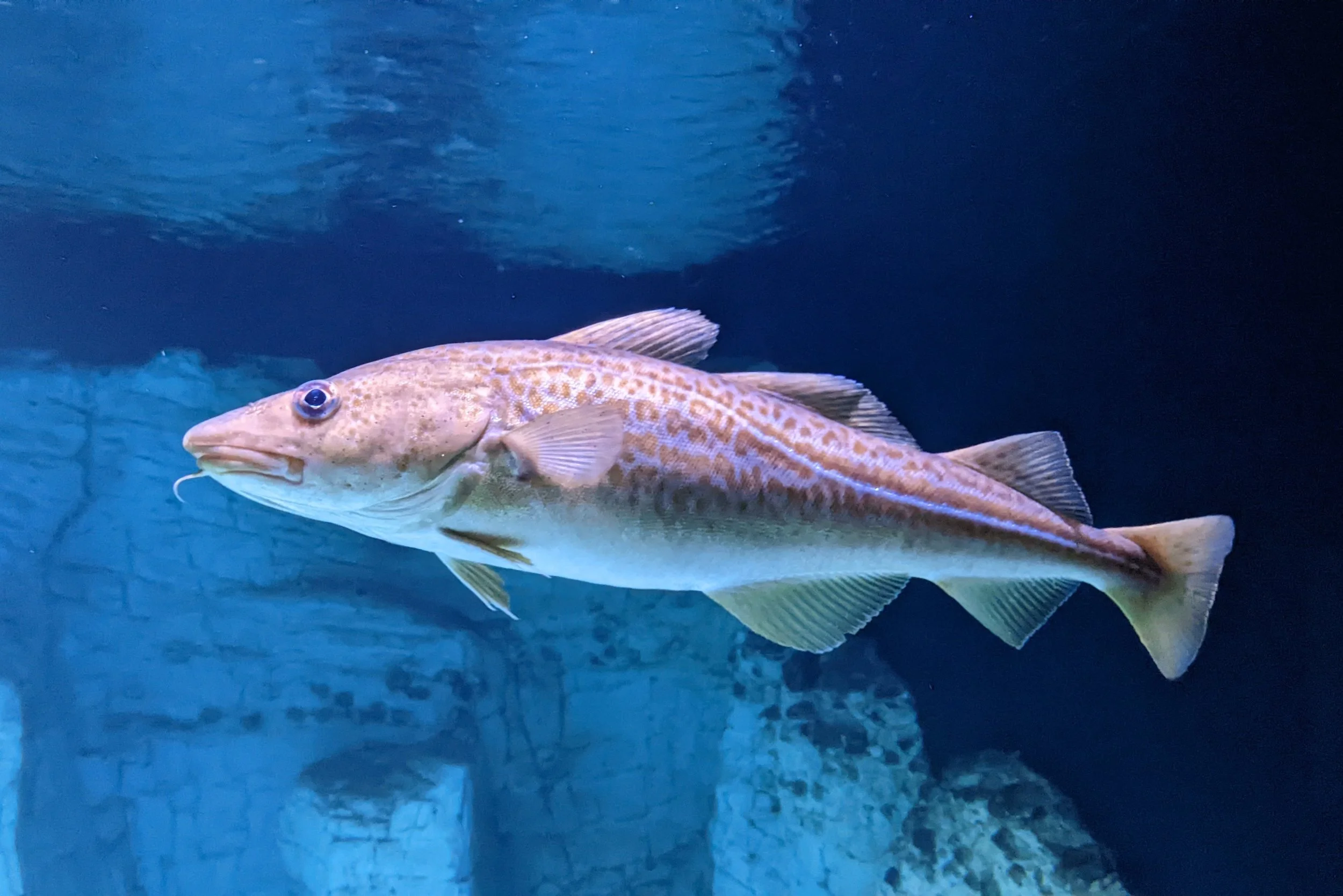
Atlantic cod, by Wilhelm Thomas Fiege - Own work, CC BY-SA 4.0
Off the back of recently updated advice from the Marine Conservation Society (MCS) to completely avoid buying UK-caught cod due to dangerous population declines, we thought we would highlight some of the work we’ve been doing to try to combat the decline of the species in the North Sea and adjacent waters.
Atlantic cod, and many similar species in the cod family, which also includes whiting, pollack, poor cod, and pouting, often exhibit complex seasonal migration patterns, typically moving between deeper offshore winter spawning grounds and shallower coastal summer feeding areas. During these migrations, they can move in large shoals and often travel hundreds of miles. If the right refugia exists within them, offshore infrastructure like windfarms can provide a welcome respite for them on their long journeys, acting as stepping stones between their summer and winter grounds.
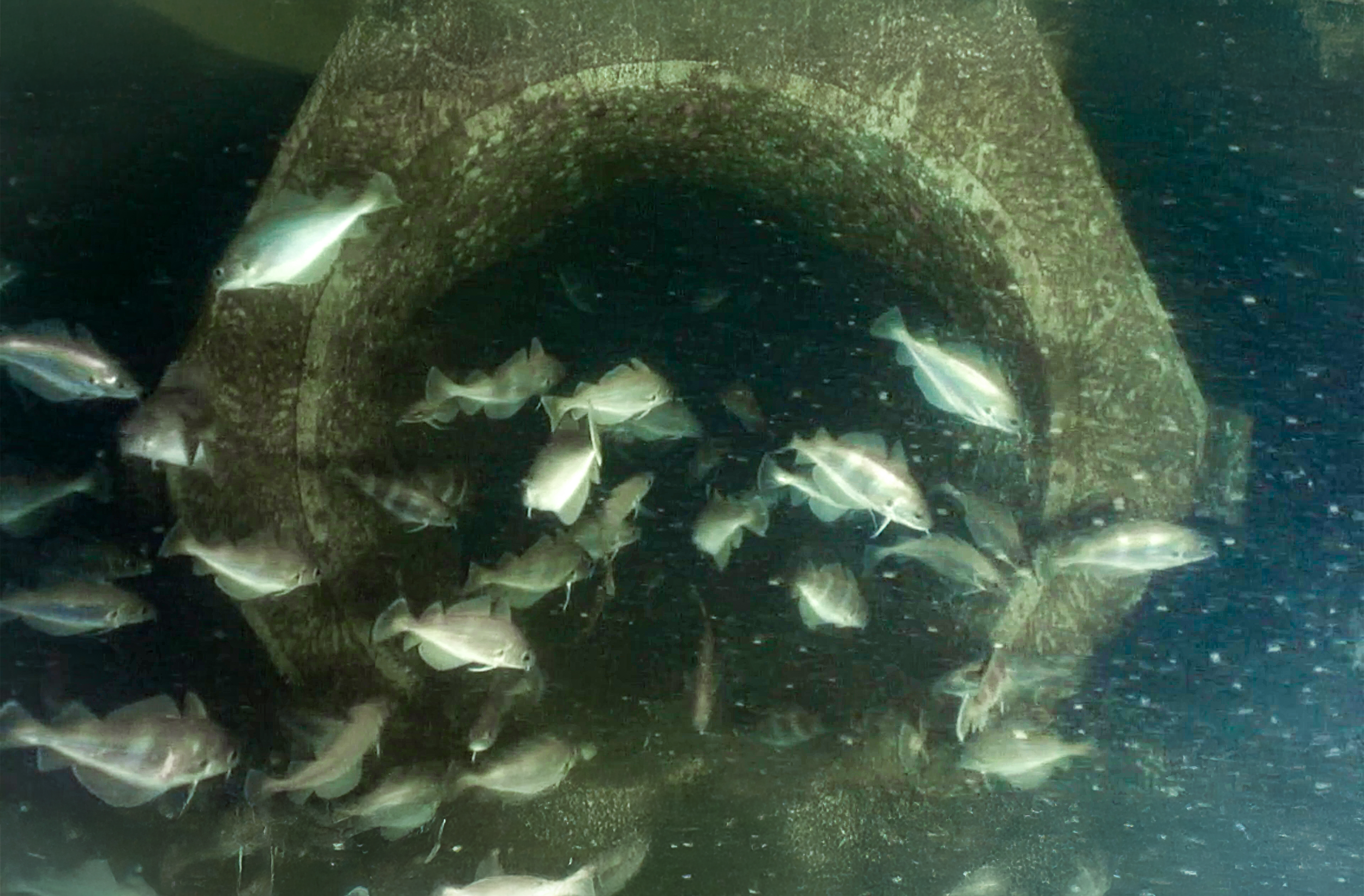
Pouting and poor cod shoaling around our ExoLodge standalone artificial reef structures in the North Sea
Our ExoLodges, standalone artificial reef structures which can be deployed around offshore windfarms and other marine infrastructure, have been specifically designed with these species in mind. Research indicates that the addition of void space and swim-through habitats to artificial reef design can add refuge and nursery habitats for many species, protecting both adults and juveniles from predators and strong currents. The ExoLodges include 1-metre-wide swim-through tunnels, which shoaling fish love to use as shelters. At test sites in both the Celtic and North Seas, the ExoLodges’ large central tunnels have proven to be very popular with fish of the cod family.
In collaboration with TotalEnergies in the Netherlands, we currently have several ExoLodges deployed at the base of a platform in the Dutch North Sea. Last September we obtained ROV footage of them after 1 year in the water, which showed large shoals of pouting and poor cod taking advantage of this novel habitat at the site. This spring we will be returning to monitor the ExoLodges at a time of the year when Atlantic cod are often migrating from deeper waters to warmer coastal waters, and we hope to capture them using these artificial reef habitats to rest on their long journeys.
Watch this space for more exciting updates!