
Coastal Nature Inclusive Design: Why is it importANt & how does it work?
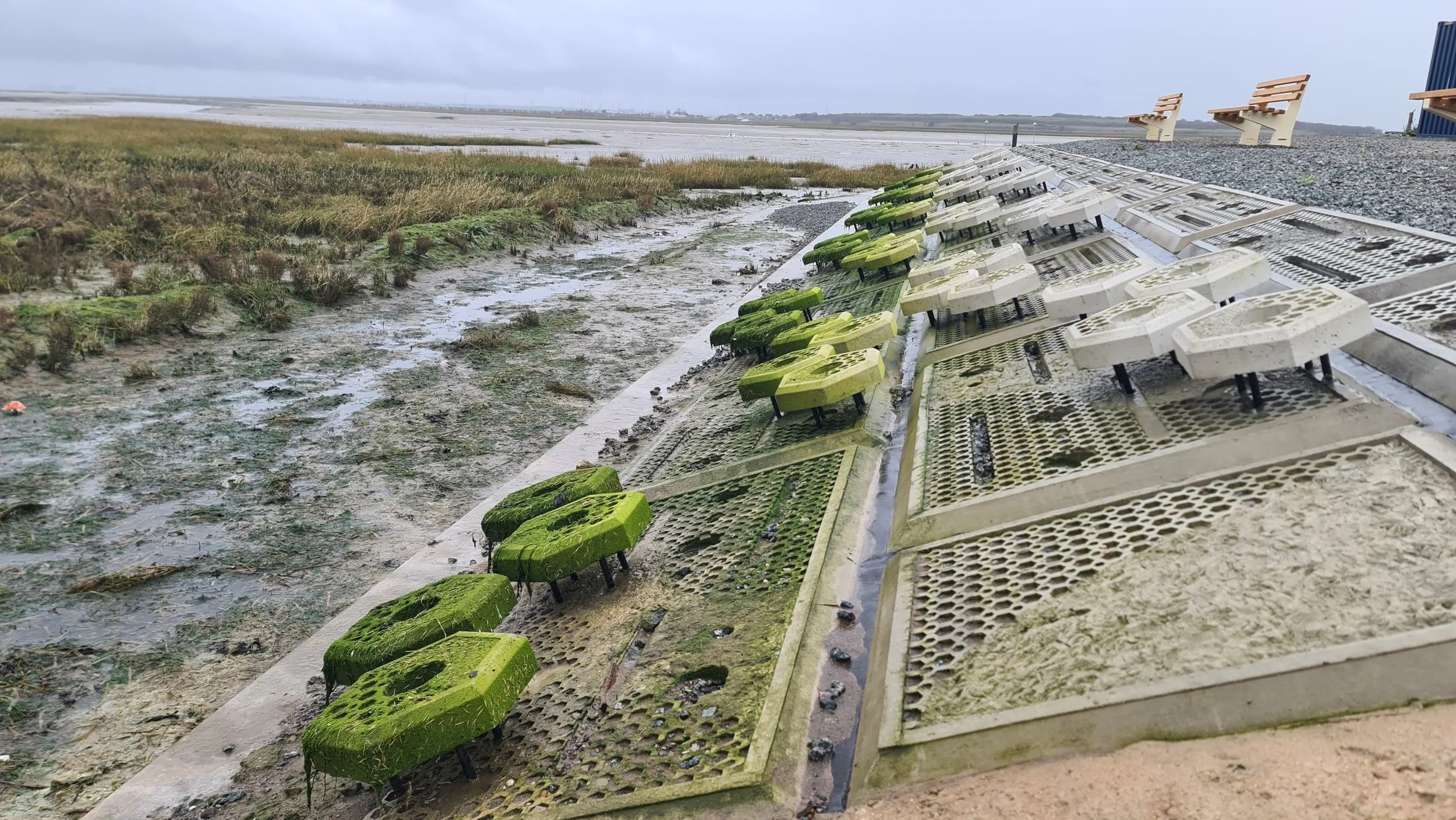
Colonised ExoTiles - Catchment To Coast, Two Tree Island
Our coastlines are changing rapidly. Threatened by sea level rise and extreme weather events, it is often necessary to install coastal protection measures to safeguard coastal communities against the impacts of a changing climate.
The most popular approach to doing this is through hard engineering, using quarried rock or concrete structures to provide a physical barrier which breaks up or reflects wave energy to prevent erosion. Whilst very effective, these kinds of interventions replace the natural complexity of coastlines with more simplified surfaces, often lacking in texture and 3-dimensional structure. This loss of habitat complexity leaves coastal organisms with decreasing amounts of habitat, resulting in declining biodiversity.
What is Nature-Inclusive Design
Nature-Inclusive Design is an approach to development which puts nature at the heart of design decisions. Whilst coastal protection must be functional first and foremost, it is possible to enhance surface and structural complexity of coastal defences, boosting surface area and surface roughness, providing the necessary environmental niches needed for coastal biodiversity to thrive.
The beauty of Nature-Inclusive design comes from its flexibility. Not all coastal environments are home to certain species, and we can deliberately target species through Nature-Inclusive Design. In addition to this, Nature-Inclusive design can be used as part of new developments, repairs to existing coastal infrastructure, or retrofit to enhance the complexity of the hard engineering used on our coastlines.
What kind of habitats can be created using Nature-Inclusive Design?
Our coastlines experience rising and falling tides over a 24 hour period. Many of us have fond memories of visiting the beach as a child and looking for creatures in rockpools. Some of us still enjoy doing this! These are the kind of crucial habitats which coastal species have evolved to inhabit over millions of years. Rockpool habitats provide protection from desiccation (drying out), as well as shade from the blazing sun. Losing these habitats from our coastlines will have significant impacts on coastal species which rely on these habitats. Nature-Inclusive Designs helps us to create coastal defences with these kinds of water retaining features so that we can protect our coastlines whilst restoring declining habitats.
Bio-armouring is another benefit of encouraging species to grow on our coastal defences through Nature-Inclusive design. Biological growth can help to absorb some of the incoming wave energy and provide an additional layer of protection. So not only do you have a thriving seawall, but you also have prolonged lifespan for coastal defence assets, bringing down costs in the long run.
Where can Nature-Inclusive designs be used?
The applications for Nature Inclusive design extend beyond coastal defence. In other coastal areas such as in ports and harbours, surface complexity was lost long ago when trade exploded following ease of shipping goods across the globe. By retrofitting habitat-enhancing panels onto these depleted surfaces, we can bring back some of the lost complexity, incorporating pool features and increasing surface complexity.