
18 months of collaboration at META
Our pilot deployment at the Marine Energy Test Area (META) at East Pickard Bay, Pembrokeshire has come to an end following an 18-month monitoring period. This collaborative project between ORE Catapult’s MEECE, Hiraeth Energy LLP, PEBL Monitoring, and Marine Energy Wales, formed a key milestone of the Living Windfarms Project and helped us to gather further evidence about the performance of our solutions in a real world environment.
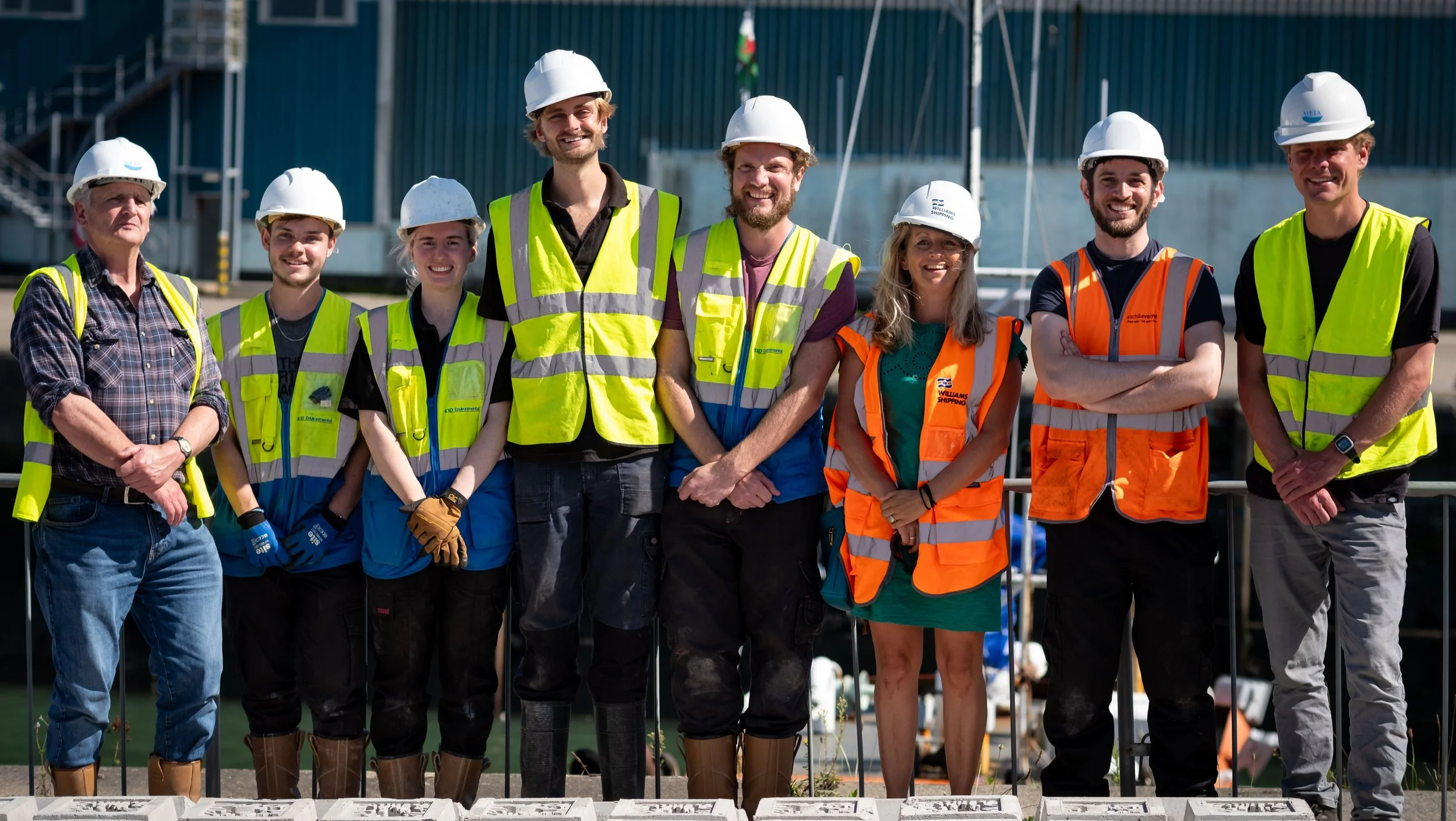
The Exo Engineering Team stand with ORE Catapult and Hiraeth Energy at Pembroke Dock
Over 16 tonnes of our Nature-Inclusive ExoReef concepts were deployed in September 2023, including 5 different Nature-Inclusive concepts. These were the ExoSphere, ExoHedron (Large and Small variety), ExoMatt, an SSCS frond mattress with Exo Engineering’s Nature-Inclusive edge weights, which was later replaced by our ExoLodge units in June 2024.
To enable comparison, an industry standard articulated concrete mattress and regular rock armour units were also deployed, providing controls for the study. Comparisons were also drawn with natural habitats, in order to understand the relative effectiveness of different designs in providing biodiversity gain.
META represented an ideal site for deployment of our solutions because it was pre-consented, meaning we didn’t need to spend time and money applying for licences and permits before we could get our solutions in the water. This was especially important considering the deployment was taking place under the Living Windfarms Project: a 3-year project, part funded by OWGP, aimed at assisting commercialised production of ExoReef units.
Monitoring
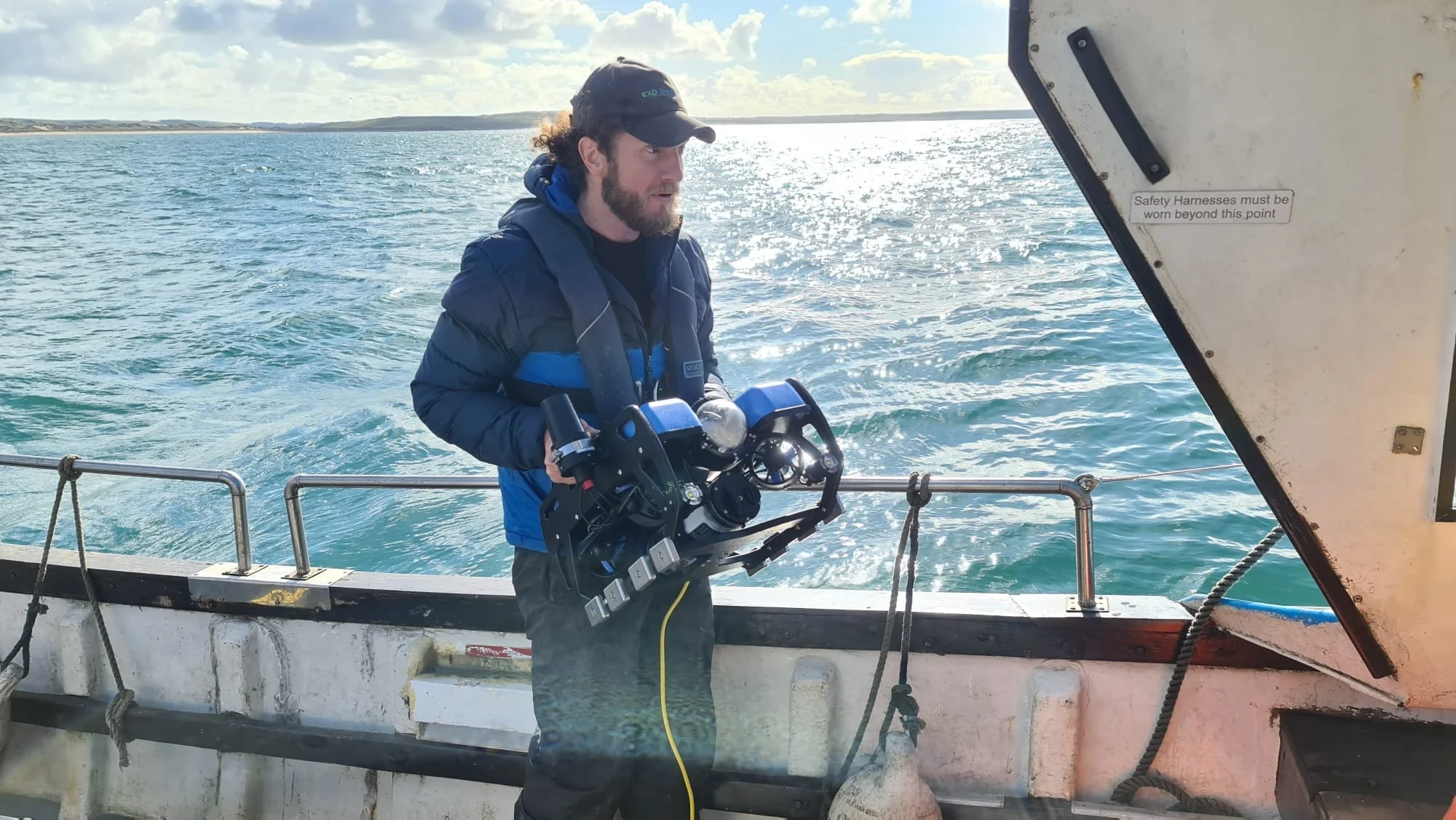
A large range of monitoring methods were used across the project, including during baseline surveys. Remotely Operated Vehicle (ROV) surveys, sediment eDNA and macrofauna identification using a Day Grab sampler, PEBL subcams, and drop-down video (DDV) techniques, including Remote Underwater Video (RUV) surveys we all used.
This combination of different monitoring techniques provided a comprehensive picture of biodiversity at the project site, from which conclusions could be drawn about the impact of our ExoReef units on local biodiversity. which could be used as a biodiversity reference point during and at the end of the project.
Results
eDNA sediment analysis indicated that a much greater number of taxa were present in April 2025 samples (n = 238) compared to September 2023 samples (n = 128).
Furthermore, exciting results were drawn from the ROV and RUV surveys conducted in September 2024 around the ExoLodges. Using the MaxN counting methods to prevent repeating counting of individuals, we found that the Lodges had a mean abundance of 16.1 of all species, compared to 3.6 for nearby sand substrates and 5.9 for local rocky reefs. These surveys also uncovered species present on the Lodges that were not present on the other natural habitats, such as Goby, Starfish and Annelid worms. These results were especially promising as they were taken only 6 weeks after the units were deployed.
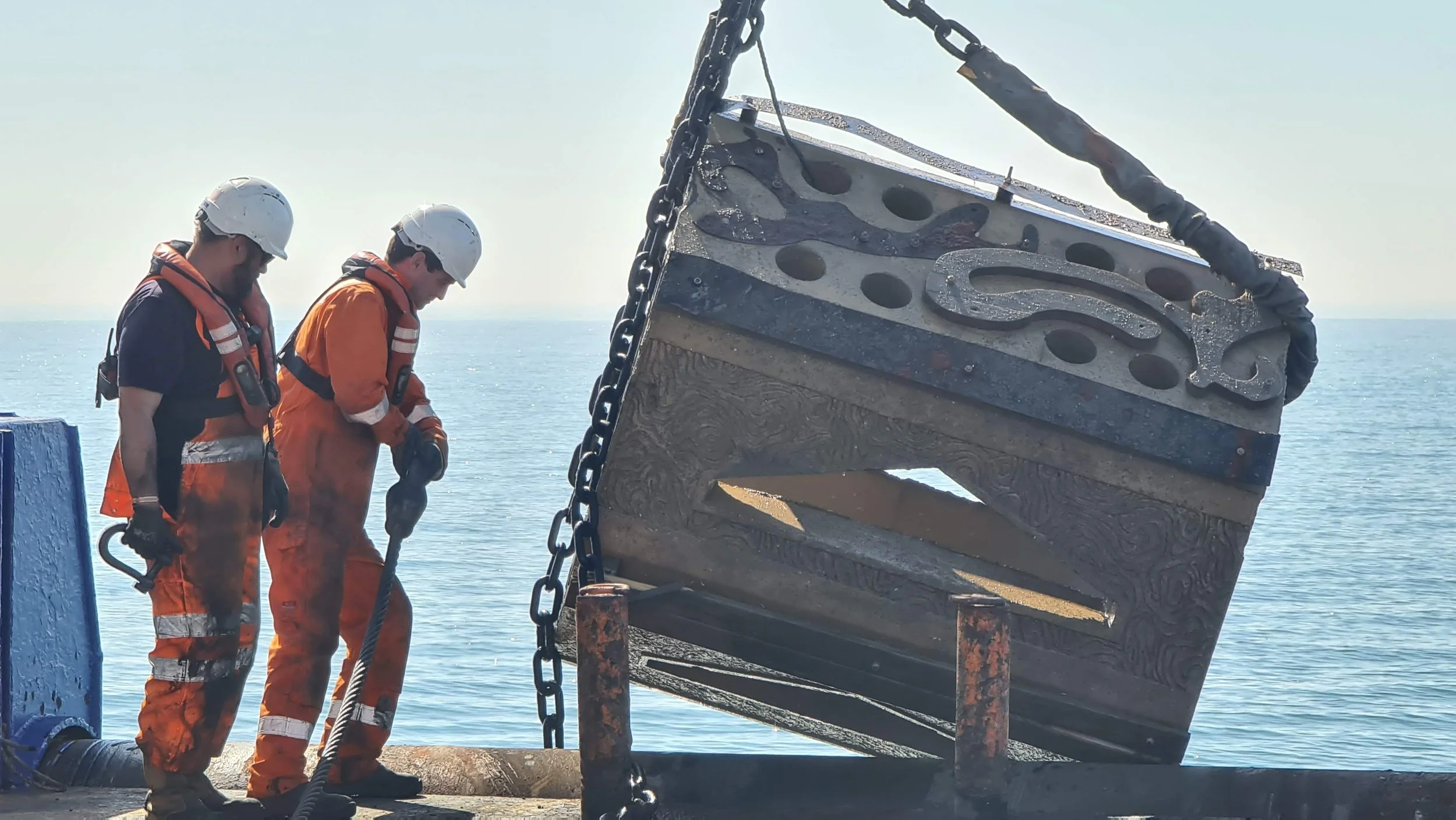
Retrieval of our units and subsequent visual surveys only acted to further support the positive monitoring results for our nature inclusive designs. The ExoLodges, despite only being deployed for 8 months before recovery, continued to show the highest level of biocolonisation. All features besides the wood panelling showed signs of colonisation, with the ‘brain coral’ texture hosting the highest number of unique species at 16, with the large tunnel coming in at second with 9. What’s more, they hosted not only already locally present species but also promoted secondary production, as demonstrated by the presence of Squid eggs and young spat of Portuguese Rock Oysters.
The ExoMatt also had been colonised by limpets and periwinkles, which were observed within the depressions of its texture surfaces, whilst its control counterpart showed no signs of colonisation at all. This was a particularly pleasing result as both the ExoMatt and its control were mostly under sediment due to the high energy characteristics of the site, which significantly limited their colonisation capacities.
Conclusions
This project helped Exo to demonstrate the positive impacts that our ExoReef units have on biodiversity, providing us with a wealth of information about macrofeature and microtexture inclusion, as well as material choice.
The shining star was our ExoLodge, which despite only having been deployed for 8 months, exceeded our expectations for the amount of species which colonised.
If you’d like to know more about the project, or see an opportunity to use ExoReefs on an upcoming project, we’d love to hear from you!
Get in touch now to speak with a member of the team.